The Algorithm Was Supposed to Fix This: 21 Years of Ghana's CSSPS Placement System
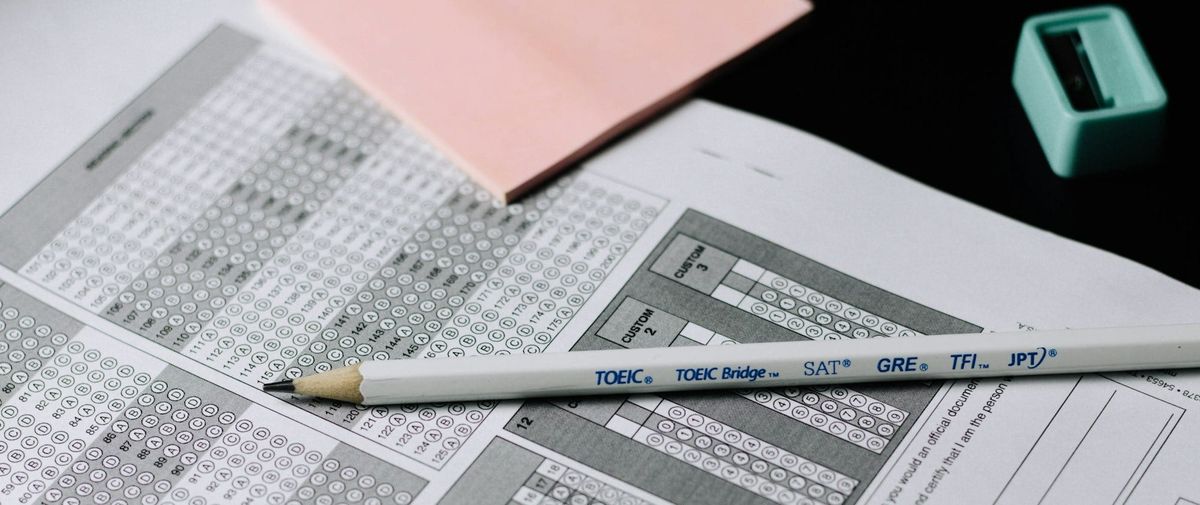
At 10 p.m. on September 4, 2026, thousands of Ghanaian families reached for their phones at almost the same time. They entered their children's examination details and waited for the placement result to appear. For some families, it was a moment of celebration. For others, it brought confusion, disappointment and the familiar question that has followed Ghana's school placement system for more than two decades: How did my child end up here?
Five days later, the Ministry of Education was warning the public about another problem. Fake placement slips, digitally altered and circulated on social media, were reportedly appearing with barcodes and QR codes that did not match records on the official system. Twenty-one years after Ghana introduced a computerized placement system partly to reduce manipulation, manipulation is still part of the story. It has simply changed form. The envelope of cash has become a doctored PDF.
What the Algorithm Was Actually Built to Fix
The Computerized School Selection and Placement System, commonly known as CSSPS, was introduced in September 2005. It was not created because Ghana suddenly had a fascination with technology. It was created because the old system had a serious problem with human discretion. Before CSSPS, placement into senior high schools depended heavily on school heads and regional officials reviewing examination results and making decisions manually. The process was slow, vulnerable to errors and, more importantly, open to favoritism.
Parents with money or connections could have an advantage when trying to secure places in popular schools. Relationships with school authorities, alumni networks, PTA connections and, in some cases, outright bribery could influence who got through the door. For families without those connections, academic performance did not always feel like enough. CSSPS was designed to change that.
Instead of allowing individuals to make many of these decisions behind closed doors, the system would use defined criteria to match students with available places. On that particular objective, the system has achieved something significant. In 2026 alone, more than 527,000 candidates were placed into senior high, technical and vocational institutions across the country. A manual system would struggle to handle that volume consistently. So when people criticize CSSPS today, it is worth remembering what came before it. The old system had problems of its own.
The Problem the Algorithm Was Never Designed to Solve
The difficulty is that the complaints have not disappeared. They have simply changed. This year, education policy analysts raised questions about the placement process as families reported long queues and difficulties in Accra and Kumasi. Some students were placed in schools they had not expected. Others received boarding or day placements that did not match their preferences. Some were assigned to schools far from home.
These experiences understandably lead parents to question the system. But the Ministry of Education's explanation points to a deeper problem. There are not necessarily too few school places in Ghana overall. The problem is where the places are and which schools families want.
More than 313,000 candidates reportedly selected Category A schools as their first choice this year. Yet those schools had just over 76,000 declared vacancies. That means roughly four candidates were competing for every available place within that category. No algorithm can solve that problem. You can build the fairest matching system in the world, but if four children are competing for one seat, three of them will still have to go somewhere else. The algorithm can decide who gets the seat. It cannot create three more seats.
Digitizing the Process Did Not Automatically Digitize Trust
This is where the CSSPS story becomes particularly interesting. The system was designed to remove some of the uncertainty created by human discretion. It replaced many individual decisions with a rules-based process. But fairness in a system is not only about how decisions are made. It is also about whether the people affected by those decisions understand and trust them. That distinction matters.
A parent may be told that the placement system followed the rules, but if they cannot understand why their child was placed in a particular school, the result can still feel unfair. This year's fake placement slip controversy makes that even clearer. The Ministry's response was essentially that the genuine system contains records that can be verified, while the fake documents circulating online do not match those records. Technically, that is a strength. But it also reveals something about the modern placement problem.
A system can be difficult to manipulate technically and still be easy to distrust emotionally. Parents are not sitting in front of the computer thinking about algorithms and database integrity. They are thinking about their children. They want to know where their child will spend the next three years, whether the school is good enough and whether the result reflects the choices they made. For them, the question is not simply whether the algorithm worked. It is whether the result makes sense.
CSSPS Is More Complicated Than a Lottery
It is also important to understand that CSSPS is not simply a random lottery. The system uses a form of matching process in which candidates are considered based on examination results, school choices, programmed preferences and available spaces. Candidates who do not secure placement in the first round can also participate in subsequent placement processes.
The system has also been modified over the years in attempts to make it more equitable. One example is the use of a deprivation score, which seeks to account for differences in the quality of junior high school environments. This matters because students do not all take the BECE from schools with the same resources and opportunities.
The system has also had to respond to another problem. Some schools were accused of underreporting available vacancies, creating room for informal admission arrangements outside the central placement system. Measures were introduced to reduce that discretion. There have also been efforts to ensure that students living close to particular schools are not completely shut out of those institutions.
In 2011, a 70/30 arrangement was introduced, reserving a portion of places for candidates living within a specified distance of a school. These changes show that Ghana has not simply built CSSPS and left it untouched. The system has been repeatedly adjusted because policymakers have recognized that efficiency alone is not enough. The bigger question is whether those adjustments can keep up with the realities of the education system.
The Complaint Is Almost as Old as the System
The scale of the 2026 placement problem may feel extraordinary, but the underlying problem is not new. Ghana has been struggling with the same basic imbalance for years. Some schools are simply more desirable than others.
They may have better facilities, stronger reputations, more established alumni networks, better boarding arrangements or a history of producing students who go on to prestigious universities and careers. Naturally, parents want their children in those schools. The problem is that there are not enough places for everyone who wants them. This has generated resistance from different groups over the years.
Alumni associations of prominent schools have pushed for greater influence over admissions. Politicians have raised concerns about communities losing access to schools in their own regions. Teachers' organizations and religious leaders have, at various points, questioned whether CSSPS is delivering the fairness it promised.
Even technical problems have contributed to the frustration. There have been cases in which students were reportedly assigned to schools that did not match their gender, among other placement errors. Each individual problem may look like a technical glitch. Together, however, they point to something larger.
The system is constantly being asked to make decisions in a country where the demand for certain schools dramatically exceeds supply.
The Next Problem Is Trust
Recent research on CSSPS points toward an important shift in how the system should be evaluated. The question should not only be whether the algorithm is mathematically fair. We should also ask whether families understand what is happening. Research on student placement outcomes has found that clarity of feedback can strongly influence how people judge their placement experience. In other words, knowing why a particular decision was made can matter almost as much as the decision itself.
That makes sense.
Imagine receiving a placement for your child in a school you never expected.If the system simply tells you the name of the school, you are left to guess why the decision happened. If the system can clearly explain how the result was reached, the same outcome may be easier to accept. That is where future CSSPS reforms should probably concentrate. There have already been proposals for more advanced placement models that would use improved matching systems, more decentralized decision making and better feedback mechanisms.
Whether Ghana eventually adopts one particular model is less important than the direction of the conversation. The next major CSSPS reform may have less to do with making the algorithm cleverer and more to do with making the system understandable.
The Algorithm Is Not the Real Problem
None of this means Ghana should scrap CSSPS and return to the old manual system. That would risk bringing back many of the very problems CSSPS was created to address. Human discretion can easily become favoritism. Favoritism can become bribery. And once families believe that money and connections determine who gets into the best schools, public confidence in the entire system begins to collapse.
CSSPS has helped Ghana move away from that model. But it has also exposed a different problem. We keep treating the annual placement crisis as though it were primarily a software problem. It is not.
It is an education quality problem wearing a software costume. Ghana can improve the CSSPS portal. It can add more options. It can open more resolution centers. It can make the matching process more sophisticated. It can improve communication with parents and students. All of those things are worthwhile. But none of them answer the most important question. Why are hundreds of thousands of families competing for a relatively small group of schools in the first place?
As long as a small number of senior high schools are significantly better resourced, more prestigious and more trusted than the rest, families will continue trying to get their children through those particular doors. And every September, the phones will light up again. Some families will celebrate. Others will wonder what went wrong. The honest solution was never going to come entirely from the placement system. It was always going to come from building an education system in which more schools are worth being placed into.
Emmanuel Ofosu writes on education, public affairs, and social policy across Ghana and the diaspora.
Comments ()